

Last updated: June 2026
Quick answer: Claude is better for deep adaptive reasoning, 1-million-token repository analysis, and structured layout writing. Gemini is better for instant multi-source research retrieval, fluid workspace task execution, and animated interface options.
| Feature | Claude AI | Gemini |
|---|---|---|
| Core Strength | Adaptive Thinking & Deep Logic | Ecosystem Velocity & Agents |
| Core Platform | Claude 4.7 Series (Opus) | Gemini 3.5 Series (Flash) |
| Context Capabilities | 1M Token Structural Memory | Real-time Streaming Vector Sync |
| Developer Tooling | Claude Code Command Line CLI | Antigravity Linux Sandbox API |
| UX Architecture | Clean, Modular Code Projects | Animated Neural Expressive Layout |
Let's start with the uncomfortable truth.
Most AI comparisons are useless. They compare benchmarks nobody cares about—random tests, cherry-picked prompts, and fake "winner"—conclusions.
Meanwhile, real users are asking something simpler: Which AI actually helps me work faster? That's the real question behind claude vs gemini, and the answer is more interesting than people expect.
For the full set of assistant matchups, start with the AI comparison listing page and use this article as the depth pass for reasoning vs research.
What Are Claude and Gemini?
Both Claude AI and Google Gemini are advanced conversational AI systems that rely on massive datasets, neural networks, modern Transformer systems, and advanced Natural language processing.
But their priorities are completely different.
What Is Claude AI?
Claude AI was developed by Anthropic. It focuses heavily on adaptive deep reasoning, structured outputs, 1-million-token context understanding, and multi-file codebase refactoring. Its strongest models include the frontier Claude Opus 4.7 system.
Claude feels deliberate and measured. It automatically scales background calculation time based on the structural complexity of your prompt block.
For a standalone feature and pricing breakdown, read the full Claude AI review.
What Is Gemini?
Google Gemini “ often shortened to Gemini ” was developed under Google DeepMind.
Its architecture is driven by the lightning-fast Gemini 3.5 Flash system and continuous cloud agent layers.
Gemini behaves less like a standard chatbot and more like an instant, streaming AI productivity layer.
For the dedicated platform analysis, see the full Google Gemini review.
Claude vs Gemini: The Core Difference
The split comes down to structure vs speed, reasoning vs retrieval, and token structural stability vs application workspace integration.
Claude feels like:
- a highly meticulous engineering lead
- a structured technical editor
- an adaptive reasoning engine
Gemini feels like:
- a rapid research coordinator
- a search-grounded database layer
- an automated 24/7 background operator
Neither is universally better, but their strengths are obvious once you use them seriously.
Claude vs Gemini: Deep Logic vs Multi-Modal Flow
When forced to solve high-stakes analytical puzzles or review thousands of lines of legacy repository classes, Claude's fine-tuned Adaptive Thinking Architecture gives it an exceptional edge. It cleanly evaluates cross-file technical interactions over its 1-million-token workspace container.
Gemini completely controls the playground when operational velocity and cross-application file coordination are required. Powered by the incredibly fast Gemini 3.5 Flash engine and autonomous Gemini Spark background layers, it organizes cross-application information loops across your workspace maps in seconds, whereas Claude takes its time to deliver a perfectly secure, structurally maintainable architectural conclusion.
Claude vs Gemini Research Capabilities
Gemini for Research
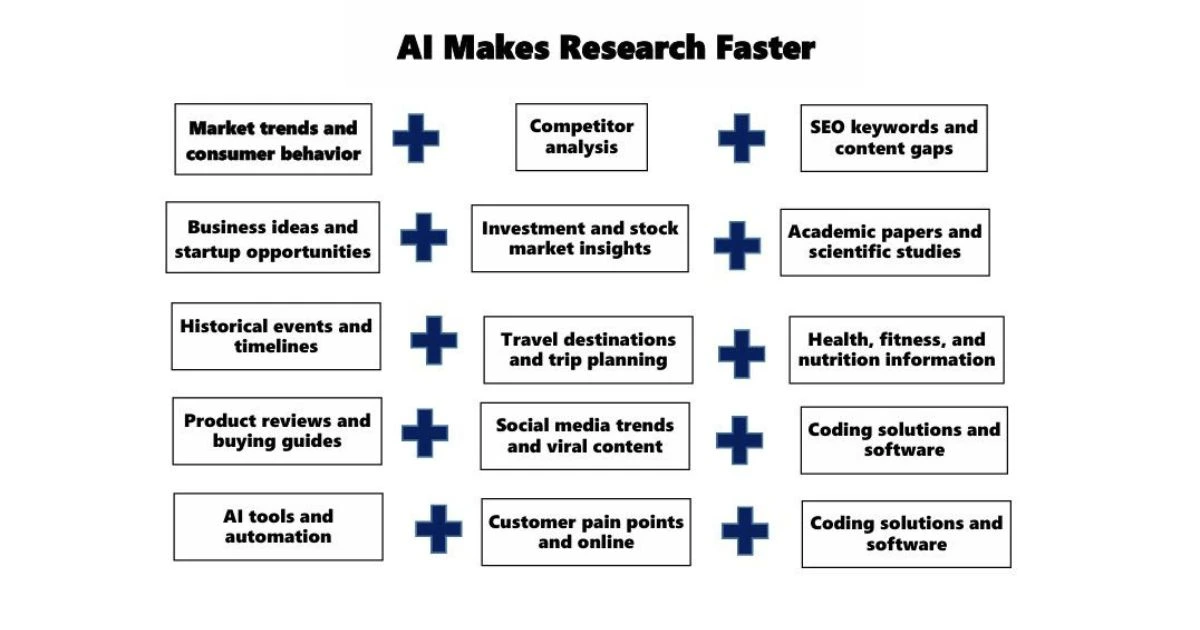
Gemini is built for information retrieval, and Google's infrastructure gives it an unfair advantage for recent information, breaking updates, comparative summaries, and rapid cross-source documentation analysis.
It operates like a real-time conversational search tool, utilizing its animated Neural Expressive UI to stream data cleanly without processing lag.
Claude for Research
Claude approaches research from an interpretive, long-context lens. Instead of scanning for isolated live search snippets, it processes massive local files like complete 700,000-word corporate policy documents, complex academic data sheets, or multi-file technical instruction sets.
Claude keeps perfect conceptual focus across its entire 1M-token memory boundaries, tracking minor details that speed-focused engines might skip.
Practical Difference
Gemini retrieves information faster. Claude analyzes massive text objects more carefully.
Claude vs Gemini for Writing
Claude for Writing
Claude is one of the strongest tools for highly polished prose and documentation structures, especially for long-form whitepapers, software manuals, systemic business briefs, and clean narrative flow. The text reads naturally, avoiding repetitive formatting loops.
Gemini for Writing
Gemini is exceptionally efficient at handling high-velocity content generation tasks, layout outlines, rapid first-draft emails, and continuous workspace task logging. Because its outputs prioritize informational optimization, creative text variables may occasionally require manual editing to build a strong emotional connection.
If your priority is content production rather than research, compare these tools against the broader AI writing software rankings.
Claude vs Gemini for Coding
| Coding Workflow | Claude | Gemini |
|---|---|---|
| Debugging | Autonomous terminal execution | Fast sandbox API support |
| Large Codebases | Unmatched 1M context retention | Cloud repository scanning |
| Frontend Work | Claude Design interface previews | Fast interface iteration logic |
| Engineering Logic | Adaptive background thinking blocks | Ultra-low latency streaming loops |
| Coding Style | Careful & maintainable | Fast & adaptive |
Claude for Coding
With the launch of Claude Code, Anthropic moved straight into your local command-line interface. It functions as an autonomous terminal agent—running local platform tests, updating complex multi-file dependencies, and committing pristine patches directly to your repositories.
Gemini for Coding
Gemini uses Google's secure Cloud infrastructure to handle programming workloads. It allows developers to check API deployments, run code tests inside isolated Linux environments, and synchronize logic cleanly across Google-hosted supercomputing systems.
Claude vs Gemini Pricing
| Feature | Claude | Gemini |
|---|---|---|
| Core Strength | Reasoning & Structure | Ecosystem Integration |
| Free Access | Free tiers available | Standard Gemini (Free) |
| Premium Tier | Claude Pro (Opus Access) | Gemini Advanced (Workspace) |
| Best Fit | Writers, Analysts, Developers | Google Power Users, Enterprise |
| Workflow Value | Reasoning-heavy workflows | Multi-modal creators & Cloud |
| Primary Value | Structured long-form quality | Enterprise productivity systems |
So— Is Claude or Gemini Better?
Choose Claude if you want:
- terminal-native autonomous programming (Claude Code)
- deep, adaptive calculation effort bounds
- 1-million-token memory capabilities
- structured technical documentation layouts
Choose Gemini if you want:
- instant real-time research speeds
- 24/7 background task automation (Gemini Spark)
- complete system unity with Google Workspace tools
- highly fluid, animated interface delivery
Frequently Asked Questions
Is Claude or Gemini better for coding?
Claude is unmatched for whole-repository refactoring and terminal CLI tasks via Claude Code. Gemini provides exceptional, low-latency utility for cloud operations and Google-centric developer workflows.
Which AI is better for research?
Gemini is faster at collecting live web information and tracking breaking data sets. Claude is superior when you need to analyze massive local legal or technical documents in a single window.
What is the biggest difference between Claude and Gemini?
Claude focuses on deep logical adaptive reasoning and terminal execution tools. Gemini focuses on real-time search velocity, multimodal interaction models, and Workspace productivity automation.
Bottom line: Claude wins depth. Gemini wins integration. The smartest workflows combine both.
To bring ChatGPT into the decision, continue with ChatGPT vs Claude or ChatGPT vs Gemini.
Explore our detailed AI tools directories to find the right solution for your business operations:
👉 Best AI Chatbots in 2026 👉 Best AI Writing Tools in 2026 👉 Best AI Marketing Tools in 2026 👉 Best AI Automation Tools in 2026 👉 Best AI Image Creation Tools in 2026