
Last updated: July 2026
8.7 /10
What is Claude AI Chatbot? (Quick Answer)
Claude AI is an artificial intelligence ecosystem engineered by Anthropic that assists you in analyzing massive datasets, executing multi-file codebase operations, and generating deeply structured research models through natural language conversations.
No complex chunking workflows required. No unnecessary marketing noise.
Just provide the raw context.
And Claude systematically addresses it.
Unlike early, speed-obsessed chat boxes, Claude is optimized for intense logical processing and adaptive deep thinking.
It uses massive current-generation models to:
- Interpret up to a 1-Million-token context window (entire codebases or document bundles at once).
- Automatically dynamically adjust reasoning time based on how complex a problem is.
- Produce exceptionally consistent, structured outputs across thousands of lines of text.
In simple terms?
Claude masters dense technical complexity without losing its memory thread mid-conversation.
What Claude AI Can Do
- Whole-Repository Programming: Load massive file repositories into a single session to repair errors, build routes, and map dependencies.
- Autonomous Terminal Actions: Execute terminal commands, fix broken tests, and commit script changes natively using the Claude Code engine.
- Adaptive Thinking Analysis: Think step-by-step through mathematical or logical proofs using fine-tuned "extra high" effort levels.
- Dynamic Prototyping: Generate functional slides, user dashboards, and corporate one-pagers through conversation via Claude Design.
- Cross-App Enterprise Sync: Pull information smoothly across Google Workspace, Slack, and internal database layers using standardized Model Context Protocol (MCP) integrations.
Not built to generate art or marketing hype.
But exceptionally reliable for structured, high-stakes data engineering.
Quick Verdict (2026)
- Claude represents the absolute gold standard for long-form text reasoning and software design pipelines.
- It performs beautifully when handling dense legal paperwork, complex scientific briefs, or legacy code systems.
- The conversational workflow is entirely ad-free, prioritizing clean focus and enterprise system safety.
But…
Its heavy reasoning models process long inputs slightly more carefully than shallow, speed-oriented engines.
Latest Claude AI Features (2026 Updates)
| Model Version | Release Date | Features Introduced | Why The Update? | Increased Capabilities |
|---|---|---|---|---|
| Claude 1 & 2 | Mar–Jul 2023 |
| Establish a safe, steerable model tailored for heavy document reading. | Ingestion of entire books/codebases in single prompts with strong tone control. |
| Claude 2.1 | Nov 2023 |
| Double contextual capacity and improve accuracy in long retrieval tasks. | Up to 500 pages of text analysis with significantly reduced false claims. |
| Claude 3 Family | Mar 2024 |
| Offer tailored speed-to-intelligence ratios for varied enterprise workloads. | Benchmark superiority in reasoning (Opus) and balanced code generation (Sonnet). |
| Claude 3.5 Sonnet | Jun–Oct 2024 |
| Displace large frontier models using mid-sized efficiency and UI interaction. | Live web app rendering, desktop cursor/keyboard automation, elite front-end design. |
| Claude 3.7 Sonnet | Feb 2025 |
| Combine fast conversational replies with deep chain-of-thought logic. | Granular developer control over reasoning tokens for advanced coding and math. |
| Claude 4.x Lineup | May 2025 – Mid 2026 |
| Scale agentic autonomous workflows across full software repositories. | End-to-end system refactoring, self-testing, and reliable long-form reasoning. |
The platform has transformed from a straightforward prompt field into an environment built around autonomous completion and system tools.
1. The Frontier Claude Opus 4.7 Model
Anthropic's newly deployed Opus 4.7 model sits at the absolute cutting edge of reasoning benchmarks. It introduces dynamic computational effort bounds, allowing it to spend more time thinking internally on complex system errors before outputting a single line of text. It also supports high-resolution visual processing for maps, blue prints, and desktop view screenshots.
2. Terminal-Native Claude Code CLI
Claude is no longer trapped in a browser page. Running claude straight from your native computer terminal console activates an autonomous programmer. It reads your whole repository architecture, modifies multi-file scripts, launches your local servers to verify errors, and writes clean git commit logs automatically.
3. Native 1-Million-Token Canvas
Anthropic brought its massive 1M-token context window to standard production models like Sonnet 4.6 and Opus 4.7. This means you can drop over 700,000 words or dozens of code files straight into the prompt field simultaneously without triggering retrieval failures or losing critical system parameters.
4. Claude Design Integration
Operating inside the Anthropic Labs sandbox, Claude Design gives you the power to translate analytical conversations directly into visual prototypes. You can command Claude to construct structural UI layouts, product dashboards, or interactive presentations without touching an external vector tool.
👉 For a deeper breakdown of how it compares, see:
- Claude vs ChatGPT
- Claude vs Gemini
- Best AI Chatbots in 2026
- Best AI Writing Tools in 2026
- Best AI Marketing Tools in 2026
When to Use Claude
- When navigating large codebases, tracking system logs, or designing programmatic routes.
- When processing massive text documents that require perfect contextual data recall.
- When you want an autonomous agent to safely edit files locally and execute terminal scripts.
Limitations You Should Know
- Lacks a native multi-modal art generator (no built-in layout image rendering).
- Extreme logic settings can increase processing latency on basic text setups.
- Premium pricing options scale aggressively for extreme enterprise context usage.
Detailed Verdict
Claude has completely redefined its operational horizon in 2026.
It is no longer just a conversational assistant tracking reasoning blocks.
With updates like Opus 4.7, Claude Code, and Claude Design, the ecosystem moves seamlessly into active technical execution across localized and cloud-hosted development nodes.
It secures its position as an unmatched partner for long-form code optimization and rigorous legal/analytical document formatting.
If your daily output requires system precision and massive context handling, Claude is an indispensable asset to have running in your editor pipeline.
How This Review Was Conducted
“ Evaluation timeframe: May 2026
” Testing process: Deep repository refactoring, 800k-token documentation parsing, and terminal CLI agent cycles
— Key evaluation areas: Mathematical reasoning depth, variable context tracking, terminal safety, and markdown code structuring
Let's look at the operational landscape honestly.
Artificial intelligence choices appear in tracking logs and design blogs practically every single week. Most of that ambient noise burns out quickly because it balances on surface-level text rewriting tricks.
Anthropic took a fundamentally different path with Claude. Instead of rushing to build social plugins or consumer app gimmicks, they concentrated heavily on foundational safety and infrastructure: building an AI that can process massive systems of information without dropping variable focus halfway through.
Understanding Claude AI: What the 4.7 System Actually Achieves
The Claude AI ecosystem operates as an analytical workspace powered by Anthropic's multi-generation large language models. It interprets complex prose prompt scripts and parses data parameters to generate production-ready code blocks and systemic documentation strings.
While competitor applications emphasize speed for short web snippets, Claude targets thoroughness and massive context capacities. Standard production tasks Claude commands cleanly include:
“ Engineering multi-file program patches and terminal-level testing routines.
” Mapping compliance frameworks across huge corporate policy logs.
“ Translating unorganized spreadsheets into precise system data models.
” Building clean content layout drafts, books, and long technical specs.
The 2026 Evolution of Claude Models
The model lineup has been heavily optimized for computing costs and reasoning weights:
— Claude Haiku 4.5: The ultra-fast entry node. Designed for immediate voice interactions and high-speed API data triage.
— Claude Sonnet 4.6: The production default workhorse. Striking an incredible balance of SWE-bench code capabilities at standard pricing models.
— Claude Opus 4.7: The absolute premium engine. Engineered with deep adaptive thinking controls to conquer severe architectural problems.
Behind the Scenes: The Constitutional Architecture
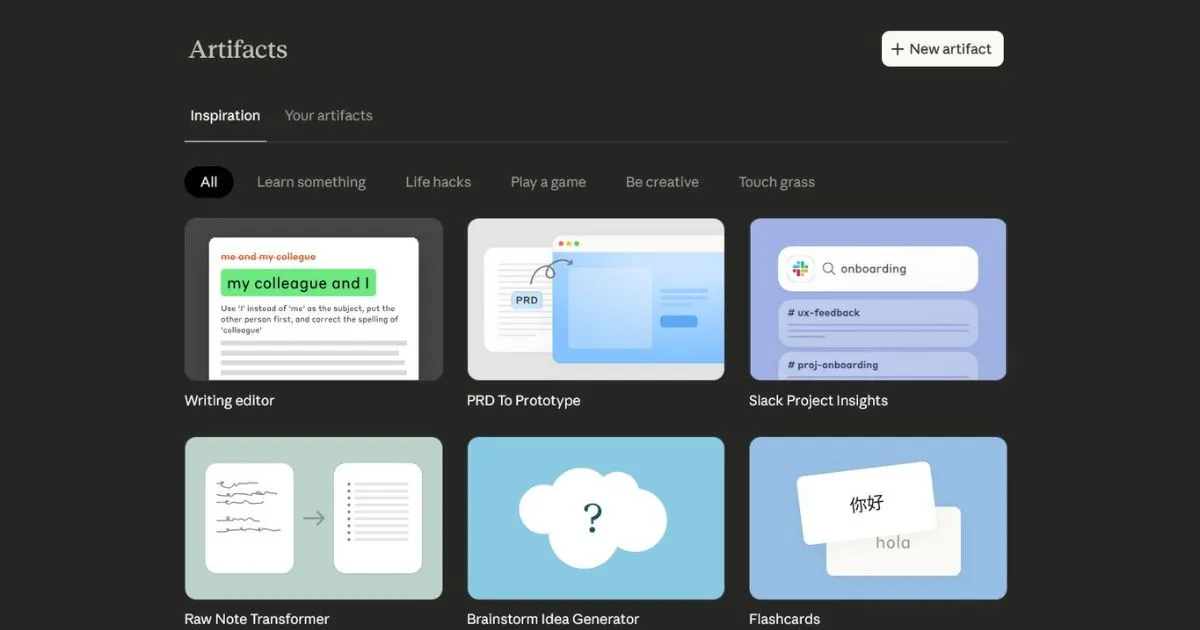
Claude runs on advanced transformer neural layers optimized natively for prompt caching configurations. Anthropic enforces its signature Constitutional AI rules directly into the training layer, keeping the model completely aligned, factual, and safe for enterprise data handling.
With the standardization of the Model Context Protocol (MCP), developers can safely bridge Claude's context window directly into secure SQL databases and enterprise local files without building messy custom data ingestion pipes.
Real-World Performance Test: Logic Output Evaluation
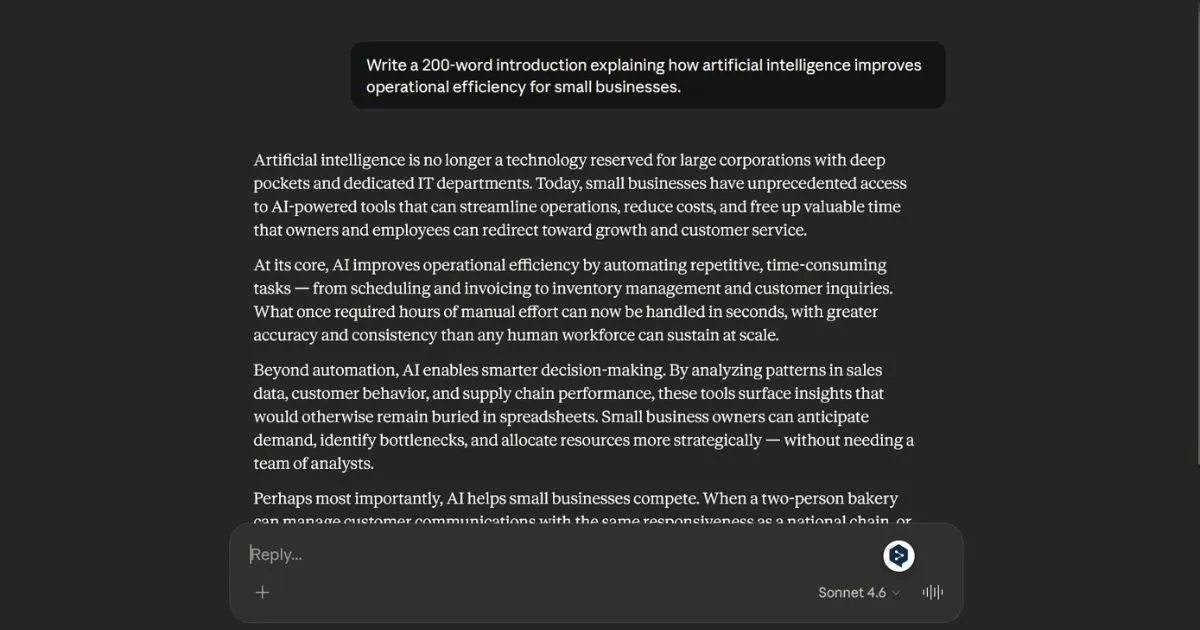
To benchmark the structural progression of Claude's generation pipeline, we passed a standard small-business automation script pattern across its multi-file processing system.
Observed Strengths
“ Perfect markdown layout hierarchy.
” Strict adherence to custom data structure types.
— Elite code variable preservation across continuous loops.
Overall Score: 8.8 / 10
Claude AI Pricing and Subscription Plans (2026 Consumer Tiers)
Free Access ($0/month)
“ Provides zero-cost access to the capable Sonnet model engine.
” Includes image evaluations, web search integrations, and core text workspace functions with rolling daily reset limits.
Claude Pro ($20/month)
— Grants 5x the message capacity of the free tier with full priority access to Opus 4.7.
— Includes absolute access to the terminal Claude Code CLI, deep extended reasoning options, Google/Microsoft Workspace loops, and unlimited private Projects.
Claude Max ($100 to $200/month)
“ Built explicitly for heavy dev operators and data scientists.
” Delivers up to 20x the capacity of standard Pro accounts, full multi-agent concurrency allocations, and unrestricted cloud compute execution hours.
Compare Claude with Other AI Tools
Balancing your options depends heavily on your daily workflow constraints:
👉 Claude vs ChatGPT — Creative versatility vs Structural data reasoning 👉 Claude vs Gemini — Agentic workflow execution vs Structural long-text analysis
Explore our detailed AI tools directories to find the right solution for your business operations:
👉 Best AI Chatbots in 2026 👉 Best AI Writing Tools in 2026 👉 Best AI Marketing Tools in 2026 👉 Best AI Automation Tools in 2026 👉 Best AI Image Creation Tools in 2026
Frequently Asked Questions
Is the terminal-native Claude Code tool free?
No. Claude Code is included inside the premium Pro and Max subscription tiers, or billed directly via pay-as-you-go developer API usage rates.
Can Claude read my whole software repository at once?
Yes. Thanks to its native 1-million-token context window, you can feed thousands of lines of active code directly into the engine to trace system bugs cleanly.
Does Claude AI generate images or digital artwork?
No. Anthropic focuses strictly on language generation, text processing, vision analysis, and programmatic execution. It does not contain an artistic image creation module.
How does Claude's "Adaptive Thinking" function work?
On premium models like Opus 4.7, Claude automatically evaluates the technical difficulty of your prompt and will spend extra background processing time working through calculation variables before outputting its response.
Final Verdict: Is Claude AI Worth Using in 2026?
Claude AI is not a shallow consumer entertainment gimmick. It is a highly focused, extraordinarily sharp system asset engineered for developers, technical writers, and serious research coordinators who need to untangle severe informational complexity.
Final Rating: 8.7 / 10
Should You Try Claude AI?
If your daily business operations demand managing large software files, reviewing dense compliance paperwork, or synthesizing highly detailed long-form documentation, Claude remains an absolutely vital force multiplier for your workflow environment.